There are fundamental differences between ETH and BTC when it comes to their
capabilities, intended use cases, and their respective ecosystems overall. I
won't be discussing those in this post. I am merely using them as
representatives for two radically different philosophies in the blockchain
space, that of proof-of-stake and that of proof-of-work.
When we read about these things in mainstream news, on social media or any
other space where these topics are being discussed, the primary consideration
for one over the other is often cited as the environmental impact that they
have - especially when it comes to power consumption.
There is no denying that a proof-of-stake blockchain has radically lower power
requirements compared to a proof-of-work blockchain. Since the vast majority
of power generated all over the world is currently not considered clean,
sustainable energy, there is also no denying that at present a proof-of-stake
blockchain will have a radically smaller energy footprint, and therefore much
less of a negative environmental impact, than a proof-of-work blockchain.
However, in my opinion, while the above seems like a perfect argument to pivot
towards proof-of-stake, it is also an extremely dangerous view that is both
short-sighted and diverts attention away from a severe underlying issue with
any proof-of-stake blockchain.
Mining ETH versus BTC
To understand the issue, first, let's take a small step back and look at why,
especially recently, mining ETH has been more profitable than mining BTC.
The short answer is gas fees; they make up a significant amount of revenue for
ETH miners but are largely insignificant for BTC miners. Ever since the NFT
craze in late 2021 gas fees on ETH have skyrocketed and are often cited as one
of the main issues of Ethereum when it comes to its viability in terms of mass
adoption; you can read more about those scaling issues directly on the
Ethereum
website.
This video is a perfect landmark for when that NFT craze peaked in the
mainstream.
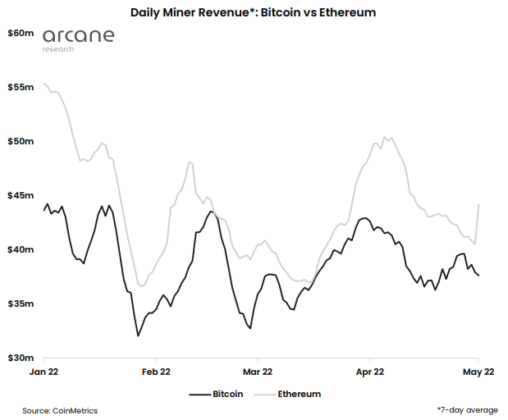
This is what mining revenues recently looked like when comparing ETH and BTC.
Mining ETH is still more profitable than mining BTC, despite the initial NFT
craze having largely subsided.
The gas fees on Ethereum are still out of control and often make trading small
amounts of ETH or low-value NFTs that live directly on the Ethereum blockchain
prohibitively expensive, which in turn limits the overall potential and
specific use cases of Ethereum. This is not a new or recent realization. In
fact, to name two examples, it's the primary reason why
Dapper Labs
decided to build their own L1 blockchain
Flow after
their experience with Crypto Kitties on Ethereum - and the primary reason why
L2 solutions and ZK-rollups like
Immutable X
exist.
Now add the negative environmental impacts, due to the escalating power
demands of proof-of-work blockchains, on top of all of that and we have the
perfect narrative for why proof-of-stake is supposedly the future of
blockchain.
The Problem With Proof-of-Stake
In order to understand the issue, we first need to look at value creation, the
foundation of every business and our capitalist society. The foundation of
every business is to create and deliver value in an efficient enough manner so
that it will generate a profit after cost. In the broadest terms possible,
value is created through work. In scientific terms, entropy is reduced by
investing energy, turning something that's chaotic and useless into something
that is more useful to humans. In simple terms, you have to spend time and/or
money in order to make money.
This is essentially the concept behind every proof-of-work blockchain, such as
Bitcoin.
Institutional investing works very differently. Institutional investors are
usually large market actors such as banks, mutual funds, pensions, and
insurance companies that pool together funds on behalf of others and invest
those funds in a variety of different financial instruments and asset classes.
Those businesses do create value like any other - however, their investors
don't, they just give them money to turn it into more money. The more money an
investor will give to these institutions to invest into ETFs, mutual funds,
crypto tokens, or similar assets, the more they will get in return. In other
terms, the richer those investors already are, the richer they will get,
without doing any work or spending any money.
This is essentially the concept behind every proof-of-stake blockchain, such
as Ethereum will be.
One could say that there is nothing wrong with this, that's just how our
society works, deal with it. I think that's a valid position to take, if being
honest about it. However, the entire crypto scene has become a huge echo
chamber about how blockchain, DAOs, decentralization, a free metaverse, and
other buzzwords are going to be our salvation and the future of humankind;
finally a way out of end-stage capitalism! The reality is that everything that
is currently happening in the blockchain space is leading us into the exact
opposite direction, the tokenization of everything, everything having some
kind of precisely measurable monetary value associated with it, essentially
capitalism on steroids. In the world of NFTs and blockchain, at least as it is
being steered right now, you will be even less relevant than you already are
if you're not already rich. If this future happens as it is being envisioned,
it'll be the most extreme divide between the wealthy and the poor that has
ever existed in the history of humankind. If put into the terms of a
free-to-play video game, in the long run, all that's going to be left are the
whales and the gold farmers.
Proof-of-Work is Not a Long-Term Issue
The current impact of the energy needs of proof-of-work blockchains is
undeniable, even more so in these most recent times of international turmoil
and war. However, I believe the right approach is not to get rid of
proof-of-work as a concept, but to see this as an opportunity and argument to
radically increase investments into clean and renewable energy sources.
Significant advances have already been made in the field of fusion energy. In
a recent milestone at the LLNL, published this summer, researchers recorded a
net-positive energy yield of more than 1.3 megajoules
during only a few nanoseconds. For reference, that's enough clean energy to power a few thousand homes for
a year. This is what we need to double down on.
Bitcoin and the proof-of-work concept were conceived with the
Kardashev scale of civilization
in mind, originally proposed by Soviet astronomer Nikolai Kardashev in 1964.
Kardashev wondered about civilization, which he defines by its capacity to
access energy, to maintain itself and to integrate information from its
environment. I encourage you to read more about his ideas and how contemporary
physicists expanded on it.
In this context, and by looking at those premises, it becomes clear how those
ideas relate to a proof-of-work blockchain and Bitcoin specifically:
Access to energy; an ever increasing amount is required based on how
proof-of-work creates an ever increasing complexity to solve. Over a period
of time, this automatically accounts for radical breakthroughs in our
ability to access energy.
Maintaining itself; the concept of decentralization, there is no
single controlling entity or group of entities.
Integrating information from the environment; the concept of
immutable information being publicly accumulated and stored on the
blockchain.
All of the above is also one of the main reasons why Bitcoin has now become
lot more like a naturally occurring commodity rather than something that's
human-made and maintained, even though it factually is.
These are the same reasons why I believe that it's a huge mistake to switch
Ethereum to a proof-of-stake blockchain. It's the antithesis to those concepts
- access to energy becomes access to capital, maintaining itself becomes
maintained through the people with the most money, because all crypto tokens
have monetary value. Besides, there are already solutions that fix all the
everyday issues this change is supposedly solving, namely L2 networks and
ZK-rollups. It's basically an unnecessary band-aid for Ethereum to work around
the energy issue, with potentially devastating results.
I do believe there is a perfectly valid and important place for more
commercially oriented blockchain projects like BNB, FLOW, SOL, IMX, and way
too many others to create an exhaustive list, especially when it comes to
addressing the everyday practical needs of projects building on top of them,
but nothing like those should be the foundation on which we build our digital
future.
The right solution would be to fix the underlying issue, specifically the
current energy scarcity, reliance on fossil fuels and other non-renewable
energy sources that pollute our environment. That's a solution that would
benefit all of humankind, all of us that are currently around as well as all
future generations - not just the richest 1%.
I realize these are lofty, maybe even idealist thoughts. Then again, people
should at least be honest about what their end-game is with proof-of-stake;
it's about maintaining control and keeping our current societal order intact
in the upcoming digital age, and a +1 at that.
When I started to look at forex trading more seriously, one of the first
things I had to do is to find a reliable and fair forex broker. I am very
fortunate to have found
Global Prime; they offer accounts for forex retail traders almost anywhere in the world,
with only the exceptions of
North Korea, Iran, USA, Puerto Rico, Ivory Coast, and Ontario, the province
of Canada.
I already wrote a post about why I chose
Global Prime
as my forex broker. However, that is only a brief overview of the true depth
beneath it all. The tip of the iceberg, in a sense. There is a very direct and
straight forward honesty with which
Global Prime
operates and they genuinely value educating their clients about the business
they are operating. To that end, they have an in-depth video series on their
YouTube channel where they explain the ins-and-outs of the forex broker
business from their own inside perspective. I found those videos to be highly
educational, eye-opening even. I have not seen this type of candid discussion
about the forex broker business anywhere else, especially not in this kind of
detail.
The videos feature Angus Walker (General Manager), Jeremy Kinstlinger
(Co-Founder) and host Sammy Althaus (Head of Retail Support) of
Global Prime, alongside occasional guests. This is an overview of the first six episodes.
I found the first two episodes somewhat difficult to follow, I can imagine
this is even more difficult for someone who is completely new to the topic.
Somewhere after the third and into the fourth episode - following the
discussion about dealing desks - was the point where it all came together for
me and started to make sense. I hope the excerpts below are helpful for the
purpose of following the overarching narrative. At the bottom of this page,
you will find a broker quiz to help you understand what kind of forex broker
you are dealing with and how honest they are with you.
Update; September 2023. Unfortunately, Global Prime
decided to mark all the videos of this series private on YouTube. However,
even though the videos aren't publicly available anymore, the core content is
still preserved here on this page in the summaries below and provides an
insightful overview on how forex brokers make money.
A-Book vs B-Book
The discussion in the first episode centers around the fundamental differences
between A-Book versus B-Book brokers. This is a key indicator to differentiate
between brokers who have your interests at heart versus those who are likely
to do more harm than good to your trading account.
The difference, in a nutshell:
A-Book: Brokers who focus on connecting their clients to financial markets,
helping them become profitable; they communicate transparently about all
trades on a case-by-case basis.
B-Book: Brokers who provide a market to trade, but don't externalize trades and
the risk; they simulate a market environment without actually connecting
their clients to real financial markets.
Angus believes ~98% of current forex brokers use a B-Book model, and none of
them focus on honesty and transparency with their clients. B-Book brokers
focus on extracting losses from their clients, which leads to a lot of
compromises in potential profitability for all of their clients.
Interestingly, in 2018, a report of the Australian Securities and Investments
Commission (ASIC) showed that trading clients lost ~$2 billion, while brokers
profited ~$2 billion. B-Book brokers usually target inexperienced clients who
don't fully understand the implications of trading in such an environment. The
second episode goes more in-depth on this particular subject, explaining how
exactly B-Book brokers are profiting from their clients.
Brokers, like any other business, need to focus on client outcomes (i.e.
profitability) for long-term, sustainable success.
Global Prime's goal is to do that for their clients in order to connect them to financial
markets reliably, while educating them about the forex trading business to
help them become successful as traders. This leads into an interesting and
important discussion about the ethics of the forex broker business; I
encourage you to watch the full episode to follow it.
Forex Brokers Profit From Client Losses
The majority of this episode further iterates on points about the ethics of
brokerages and regulatory bodies that were introduced in the first episode,
and how
Global Prime
operates differently than most other forex brokers.
Why do forex brokers B-Book?
Because most retail traders tend to lose, the profit margin for a B-Book
broker is 2x to 6x greater than that of an A-Book broker. Brokers aren't
penalized for the practice of directly profiting from their client's losses
and can be vague about their product descriptions to create loopholes. They
are also able to advertise leverage rates of 1:500 or higher, which helps them
attract clients by making it appear as if they offer great trading conditions.
In a sense they do, but leverage amplifies both wins and losses, and since
most retail clients tend to lose it's in the best interest of B-Book brokers
that their clients use as much leverage as irresponsibly as possible.
Usually, B-Book brokers profile and divide their clients into two groups -
profitable traders are transferred to a secondary A-Book
(connected to actual markets), while losing traders stay in the primary
B-Book (markets simulated by the broker). The focus of these brokers is
to optimize their B-Book trading to facilitate more clients losing, in order
to maximize their profits. For profitable traders this usually creates very
poor trading conditions, because optimizing liquidity for their A-Book is
often an afterthought for these brokers.
B-Book brokers are similar to casinos and gambling business models in that
they profit off of their client's net losses, not their net gains. They are
focused on marketing and the constant acquisition of new clients instead of
client retention and bringing actual value to their clients.
How does
Global Prime
compete as an A-Book brokerage?
Their product offerings are not that different from those of B-Book brokers,
but the leverage offered to their clients is more conservative. A-Book
brokerages focus on trade execution speeds, quality of trades, and typically
have 1-3 prime brokers. A-Book brokers get direct liquidity from different
banks and customize their pricing for institutional and retail clients.
A-Book brokers profit from a mark-up on spreads, swaps, and commissions - not
off of a conflict of interest like B-Book brokers.
Essentially, this enables A-Book brokerages to focus on qualitative results
for clients w.r.t. transparency, liquidity, and profitability instead of pure
quantity of clients and trades.
Global Prime
specifically values building a community of educated and profitable traders
who can hold the brokerage accountable for results and advice.
Dealing Desks Exposed
The third episode centers around dealing desks at a brokerage, what they are,
how they operate, and why you should care about them.
Essentially, dealing desks are tasked with risk management for a brokerage.
The underlying principle, as with B-Book tactics in general, is for clients to
lose, so that the brokerage can profit from those losses. In certain cases,
dealing desks may even deploy deterrent strategies against winning clients to
stop them from making too much of a profit at the brokerage's expense - such
as artificial slippage, delaying trades, increasing latency, limiting
execution speeds, or artificially changing the trading environment.
The checklist for a typical dealing desk:
In the long run, the clients always have to lose.
Hedge the least amount possible. The more exposed a B-Book broker is,
the more money they stand to make. For instance, if they make $100-200
million in a quarter, then the market exposure they carry is, on average,
over $1 billion.
Hedge less in volatile markets. More volatility = more client losses
= more profit for the broker.
Clients with excess risk always blow up their account.
The A-Book is not the focus.
The core principle is always to optimize revenue per million and
maximize profits for the brokerage through earning from client losses.
Dealing desks can switch a client from A-to-B-Book (or vice-versa)
even mid-trade, and the client has no idea. This leads to the client
suffering a higher possibility of losses due to the aforementioned unethical
practices of delaying trades, artificial slippage, etc.
These forex brokers always have a set percentage of winning clients who are
permanently put on the A-Book, but that A-Book itself is often only an
afterthought, so the client doesn't have access to optimal liquidity or an
ideal trading environment. This is bad for these profitable clients, as it is
likely that they are getting a sub-standard return on their investment at
the brokerage.
It can result in a double loss for the brokerage if they move a client from
B-to-A-Book; i.e. if a client wins on the B-Book side, then the brokerage owes
them money. Then, if that client is moved to the A-Book and loses, that's
another loss for the brokerage as well because now the brokerage owes money to
a bank. Thus, it requires good timing, expertise and substantial experience to
operate a dealing desk at the highest efficiency.
B-Book brokers primarily make money from exposure + volatility = risk
(the "formula" for client losses) not from commissions or spread
revenue across clients. This is one of the reasons why they are eager to give
500:1 or more leverage to clients, who (statistically speaking) inevitably
make large losses. Leverage amplifies both wins and losses, and the quicker
clients blow up their account, the quicker a B-Book forex broker generates a
profit.
What are the two most important tools for every B-Book brokerage?
Marketing. - This brings clients to the brokerage to make
money off of them. Since the strategy is for clients to blow up their
account, and it is expected of them to eventually give up forex trading in
the process, these brokers require a constant stream of new clients.
Dealing Desks. - The broker completely controls the trading
conditions and risk management policy by constantly monitoring and
dynamically adapting the trading environment.
A-Book brokers on the other hand focus on managing liquidity and communicating
with liquidity partners to make sure that their clients receive the best trade
execution speeds and trading environment.
Why should you care?
The primary mission of dealing desks is making sure individual clients don't
make too much money, so that the brokerage can profit from their losses
instead. Being a high-value, high-volume, winning client is actually
detrimental to a brokerage firm that primarily operates on a B-Book. This is
why it's so important to know whether a brokerage has your best interests at
heart - and to help answer that, please refer to the quiz at the bottom of
this page. The Q&A style format should be self-explanatory after reading
and digesting this article, even more if you watch all the videos as well.
Do A-Book forex brokers like
Global Prime
have dealing desks?
Normally, an A-Book forex broker does not have (nor need) a dealing desk.
However, batch hedging, where trades are internalized until they reach a
certain value threshold, after which they are connected to the external market
environment, has some characteristics of a dealing desk. The key difference is
that these trades and clients are not individually profiled; instead, the
trades are only internalized until their combined value aggregates over a
preset limit. The brokerage doesn't make money off of any client's losses (if
any) in this case. It is considered a budgeting and cost saving measure, in
regards to transaction volumes, to accommodate retail traders with small
accounts and to ensure profitable trades for all clients involved.
Real Liquidity vs B-Book
This discussion focuses on exhaust flows and the value of real liquidity of an
A-Book brokerage vs that of a typical B-Book brokerage. The episode features
Elan Bension
(Co-Founder, Director Institutional) of
Global Prime
as a guest.
In the B-Book business model, when a broker moves a profitable client from
their B-Book to their A-Book, they are "exhausting" the trade volume of that
particular client into the real market. The losing clients are kept on their
internal B-Book. Meanwhile, an A-Book broker tries to exhaust and showcase as
much of their trading volume as possible to the market, to maintain complete
transparency about all client transactions.
The system of trade in A-Book vs B-Book:
In general, the system of how the trades are executed in A-Book and B-Book
brokerages are quite similar, up until the time when the counterparty fills
the trade. With an A-Book brokerage you are trading against real, external
liquidity providers, whereas with a B-Book brokerage the trade is being
internalized by the brokerage.
In both cases, the trade goes through the platform and then hits a
bridge/execution engine. Now, at the execution engine, in a B-Book
execution, the trade will follow all the settings prescribed by the broker,
i.e. the latency of execution. Then, the system will take a snapshot of the
market liquidity after that latency time-gap has passed (e.g. 30
milliseconds), and then fill in the final order according to the available
liquidity and other parameters present at that particular time.
An A-Book brokerage uses live-market trade response times; while B-Book
brokers have to simulate/synthesize the latency, response times, and order
fills for clients with larger orders. This isn't a true reflection of
current market conditions and easily abused or manipulated for profit by the
broker, at the expense of their clients.
The quality of liquidity = the quality of the relationship.
The quality of liquidity provided to clients is often dependent on the
relationship between the brokerage firm and their liquidity providers.
Global Prime
has a team dedicated to communicating and showcasing the quality of their
current client flow to their liquidity providers. Elan says that banks don't
mind seeing diverse (both good and bad, i.e. losing and winning) client flow,
because what matters most to banks is transparency. Due to this openness and
dedicated relationship between the brokerage and their liquidity providers,
Global Prime
is able to provide a superior quality of liquidity to their clients compared
to B-Book or even other A-Book brokerages.
In B-Book brokerages, there is usually a lack of transparency with banks.
Those firms intentionally send them about 95% bad client flows (i.e. mostly
the winning clients, which they don't want on their internal B-Book), which
negatively impacts the banks investing with them. Thus, the banks start losing
faith in the B-Book brokerage because they (the banks) are consistently losing
money by investing with them. In the long run, this leads to the banks being
more defensive with their injections of liquidity, which increases the risks
of slippage and outages for the trading stream of the B-Book brokerage. This
then affects both A-Book & B-Book clients of the firm, leading to system
breakdowns.
Additionally, the A-Book clients of primarily B-Book brokers suffer from a
lack of dedicated attention to their portfolios and liquidity management.
Meanwhile, a purely A-Book brokerage can offer better liquidity and attention
to their clients due to a better relationship with their banks. Having a good
relationship with their liquidity providers also enables an A-Book brokerage
to customize the revenue/liquidity streams to fit their clients better. For
them their A-Book isn't an afterthought, it's the core of their business.
The Real Reason Brokers Offer 500:1 Leverage
There is a common sentiment in the forex retail trading community that one of
the best ways to get higher returns is through higher leverage.
Is it possible to get higher returns (~5% per month) without very high
leverage?
It is entirely possible to do so, but it isn't attractive to most traders
because higher leverage seems like a good deal or shortcut to most. However,
most of the traders who are entering the market today with B-Book brokers are
uninformed about the true risks of higher (like 500:1 or more) leverage, and
haven't had suitability tests done to actually assess their ideal leverage and
risk capacity. Ultimately, this leads to the wrong belief that they absolutely
require higher leverage to make more money, or even to make any significant
amount of money at all.
However, B-Book brokers often have a near-guaranteed return on any investment
they make with a losing trader. This is why they are happy to offer exorbitant
leverage rates, or welcome and deposit bonuses, because at the end of the day
the brokerage is going to make a net profit from their clients' losses,
carefully managed by their dealing desk. Extremely high leverage is not always
in every trader's best interest. Often, when traders ask back-office or B-Book
brokers for higher leverage, there is no risk assessment done and minimal
information is given to the trader about the risks involved. This usually
leads to massively amplified losses on the trader's side, meaning quicker and
higher profits for these brokerages.
Angus, Jeremy and Sammy all agree (as before, in the second episode) that
B-Book brokerages are like casinos, where some people might get lucky every
once in a while, but the house always wins. Angus reminds us that the general
rule of thumb with trading is to try and make 1% profit with each trade, and
nobody really needs 500:1 leverage to make a 1% profit.
Personally, I think the issue is that most retail traders misunderstand the
purpose of leverage. They see it as a means to open a few extreme positions in
an effort to make as much money on a few trades as quickly as possible. In
reality, the main benefit of high leverage, as I see it, is that it allows you
to open a lot of very reasonable positions in parallel. However, this is not
something that a regular retail trader should be doing. If you're manually
opening 20-30+ positions in parallel on a daily basis, chances are you're
probably overtrading. For regular retail forex trading, something along the
lines of 100:1 leverage is more than enough and already requires a fair amount
of discipline to manage.
In equities trading and other financial trading platforms, there are usually
stringent background checks and risk assessments required, no matter what kind
of financial instruments are offered to traders, because there is an
underlying market which is heavily regulated by proper institutions. In forex
trading however this is not always the case, and there are many ways to skirt
around the few regulations that are in place, which lead to the creation of
the A-Book and B-Book business models in the first place.
Why Forex Brokers Profile Clients
Angus reiterates how B-Book brokers profile clients in order to optimize and
maximize their own profits by carefully categorizing traders. As previously
mentioned, the profit difference (revenue per million) between an A-Book and
B-Book brokerage is significantly in favor of the B-Book brokerage. They don't
have their clients' best interests at heart, since relieving them of the money
in their account is their primary source of revenue, and will do whatever it
takes to make money off of as many of their clients as possible.
The profiling of potential clients starts with the marketing team, who
focus on jurisdictions where they predict a higher number of unsophisticated
and amateur traders. The B-Book broker's primary objective is to get as many
such traders on board as possible, because they are the main target of B-Book
tactics. Usually, if a broker is offering a "learn as you trade" service, they
are more likely to be running a B-Book. The same applies to welcome bonuses,
deposit matching, and similar promotions.
In order to further profile their clients,
a B-Book brokerage will then go through a client's transaction history and
buying behavior. This serves to find out whether to categorize them as a losing trader (who
is kept on their primary B-Book) or a winning trader (who is sent to their
secondary A-Book), and which strategies to employ to make the most amount of
money from that client.
Using highly sophisticated profiling strategies as well as experienced dealing
desk operators, B-Book brokers are nearly always at an advantage. They can
plan ahead and keep refining their methods of extracting profitability from
losing traders by internalizing all of the risk and guiding inexperienced
traders towards sustaining heavy losses. While the brokers have a plethora of
information and data about their traders' skill level and trading history, the
traders do not have this advantage/luxury, unless they use equally
sophisticated third party tools.
At the end of the day, forex trading is a zero sum game and a B-Book brokerage
will always be the winner in the trading environment they provide and fully
control. It is a very adversarial and competitive situation, with a major
conflict of interest between the B-Book brokerage and their clients. Winning
clients who are making money are essentially a kind of opportunity cost for
B-Book brokers, or in other words, a necessary inconvenience that comes with
the territory.
- Isn't that precisely the reason we all started forex trading though, to
win trades and to make money?
Broker Quiz
The following five questions can be asked of your favorite broker. If
your broker is honest, they should be able to answer you easily and without
hesitation.
Rule #1: This must be sent to the compliance department of your broker.
Rule #2: You must demand YES/NO answers for this to be effective.
Do you profile your clients into separate books (i.e. A-Book / B-Book) based
on their profitability? YES/NO?
The answer should be NO. An ethical broker should not offer
different trading conditions to their clients based on their
profitability.
Can you categorically state that you do not profit from client losses
through warehousing client trades? YES/NO?
The answer should be YES. If the answer is NO, then the
broker is primarily set up to profit from client losses instead of
providing access to financial markets as a service.
Do you notify clients when you switch them from A-Book to B-Book ?
YES/NO?
If the answer to the first question is YES, then the answer to this
should be YES as well. That would mean the broker is profiling
clients, but at least honest about doing so. If the answer to the first
question is NO, then the answer to this question should be
N/A.
Can your clients increase their leverage without any assessment?
YES/NO?
The answer should be NO. A responsible broker will make sure that
clients do not overtrade and understand the risks of trading with very
high leverage.
Do you provide some form of post trade transparency to demonstrate which
liquidity provider filled the client's trade? YES/NO?
The answer should be YES. Otherwise there is no transparency on who
filled the trade on the opposing side and whether the trade was based on
real market conditions.
Both omega-3 fatty acids and CoQ10 play an important role in supporting the
optimal performance of various physiological processes. Coenzyme Q10 is
naturally produced in the body and stored in the mitochondria, the powerhouse
of the cell. It acts as a potent antioxidant agent that, if taken as a
supplement, can help with various medical conditions. Omega-3 fatty acids
derived from fish and other seafood typically deliver a combination of EPA
(eicosapentaenoic acid) and DHA (docosahexaenoic acid) fatty acids to help
prevent deficiencies. There is a third omega-3 fatty acid, ALA
(alpha-linolenic acid), which is found mainly in plant oils such as flaxseed,
soybean, and canola. Diets in developed nations tend to be rich in ALA
(typically from oils used to fry food), but poor in EPA and DHA, unless a diet
regularly includes fish or other seafood.
Both omega-3 fatty acids and CoQ10 are commonly found combined in the same
supplement because they have synergies with each other based on their
individual action. They are often marketed as heart health products since both
help fight inflammation, support blood vessel and cardiovascular health,
nourish brain cells, and reduce mental stress.
Health Benefits of Omega-3 and CoQ10
There is a wealth of literature and websites on the potential health benefits
of omega-3 fatty acids. Here I am focusing on some of the key benefits of
omega-3 fatty acids and CoQ10 as they relate to the topic of longevity.
Cardiovascular Functions
Medical research studies have shown that omega-3 fatty acids are able to
support a healthy heart in numerous ways. They decrease the level of bad
cholesterol in the body, help regulate the amount of triglycerides (i.e.
energy stored in fat cells) and increase the concentration of high-density
lipoproteins a.k.a. good cholesterol. As a result, this reduces the risk of
plaque formation in blood vessels, which in turn promotes optimal blood flow
and heart functions. Moreover, they help with high blood pressure, relieve
inflammation and may even help resolve harmful blood clot formations inside
blood vessels.[3][4][6][7]
Studies reported a potent antioxidant effect of CoQ10 that relieves oxidative
stress in cells, protects cellular integrity and helps vital body organs.
Several medical studies have shown that CoQ10 has a significantly positive
effect on blood sugar levels and cardiovascular health. It helps regulate
blood sugar levels, lowers the amount of triglycerides, and supports a higher
concentration of good cholesterol in the blood. All these physiological
effects not only assist heart functions, but also may help with type 2
diabetes symptoms and synergize with the effects of omega-3 fatty acids.
Moreover, the antioxidant action of CoQ10 not only benefits everyday brain
functions, but also reduces the risk of developing neurological diseases and
disorders.[1][2][9][16]
Neuroprotective Effect
Studies reported a neuroprotective effect of omega-3 fatty acids that not only
slows down the progression of neurological diseases but also helps relive
symptoms of depression and mental stress. An optimal supplementation of
omega-3 fatty acids was reported to lower anxiety, improve states of
depression, and to inhibit the production of pro-inflammatory mediators,
including interleukin-6 and tumor necrosis factor-alpha (TNF-α).[5][6][7]
Brain Health
In addition to their neuroprotective effect, studies suggest that an optimal
intake of omega-3 fatty acids results in tangible benefits for brain health in
terms of mental ability and performance. Medical research studies reported
that optimal levels of omega-3 fatty acids support cognition, improve memory
retention, support social skills, and increase concentration as well as
attention span. A proper intake of omega-3 fatty acids may even lessen
symptoms of hyperactivity, aggression, sleep apnea, and impulsiveness. This
was found in a study specifically about children, but still reminds of similar
effects in adults mentioned before.[5][6][7]
These particular benefits are the primary reason why omega-3 fatty acids are
also highly popular as supplements in the nootropic community.
Eye Health
Macular degeneration is a serious threat to eyes sight and may, with old age,
eventually result in permanent blindness. Different medical studies reported
that omega-3 fatty acids have the ability to protect the retina against
different pathological and environmental hazards and reduce the risk of
macular eye degeneration. Thus, they help protect vascular and neural retina
tissues which in turn improves eye health and longevity.[6]
Sexual Health
An optimal amount of CoQ10 supports sexual health and wellbeing in both men
and women. Medical research studies reported that the antioxidant activity of
CoQ10 improves testosterone levels, increases sperm count, and encourages
sperm mobility for improved fertility. Furthermore, studies confirmed a
significant positive effect on overall fertility and sperm quality by
protecting sperm cells against chemical toxins in the body.[12][13]
In the case of women, medical research studies confirmed a positive impact of
CoQ10 supplements during pregnancy. It not only reduces the risk of
preeclampsia but also improves the ovarian response to stimulation as well as
embryological parameters that help fertilization and support the optimal
development of the embryo.[8][11]
Physical Performance
CoQ10 is stored in the mitochondria and part of the process of cellular energy
production. It is required for proper cellular mitochondrial functions and
helps during physical activities. Studies reported that supplementation with
CoQ10 relieves muscle fatigue and delays exhaustion, both of which enhance
athletic performance. The antioxidant activity of CoQ10 further promotes
mitochondrial functions by protecting them against oxidative stress.[14][15]
Quality of Life
Adding more to the previously discussed health benefits, omega-3 fatty acids
also reduce the risk of developing metabolic disorders, including diabetes.
They increase resistance against inflammation as well as insulin sensitivity,
which helps regulate high blood sugar levels. As a result, they decrease the
risk of developing various medical conditions linked to irregular levels of
inflammation, including cancer and heart disease. Overall, all of these are
effects that can meaningfully contribute to an increased health span.[4][5][20]
Studies also suggested that omega-3 fatty acids support resistance against
autoimmune types of diseases and may improve the symptoms of rheumatoid
arthritis, ulcerative colitis, Crohn’s disease, and psoriasis. Moreover, they
support healthy bones and joints by reducing pain and helping to increase grip
strength. In regards to common aging related diseases, optimal intake of
omega-3 fatty acids reduces the risk of osteoporosis and arthritis.[7][18][19]
Complementing the health benefits mentioned above, an optimal amount of CoQ10
in the body helps reduce the occurrence of migraines and decreases the
severity and occurrence of headaches. Moreover, CoQ10 slows down the
progression of type 2 diabetes via reducing fasting blood sugar and hemoglobin
A1C levels. It stimulates the metabolism of fats and discourages their
accumulation in adipocytes (i.e. fat cells). Some studies also reported that
CoQ10 supports lung functions and tissue oxygenation via suppressing
inflammatory response. Thus, it might also reduce the risk of developing
certain respiratory conditions, including asthma and chronic obstructive
pulmonary disease.[1][2][9][10][16]
Omega-3 fatty acids improve skin texture and help maintain younger looking
skin. They play an important role in skin hydration, reduce the risk of
developing abnormal skin conditions and improve skin immunity against
pathological agents. Additionally, they improve oil production to help prevent
premature aging of the skin through exposure to environmental hazards. Studies
also reported that they contribute to protecting the skin against harmful
radiation from the sun and increase the concentration of collagen in the
skin.[17]
Lastly, please note that I am only talking about my personal experience and
opinion. This is not medical advice and what works for me might not work for
you. Please make sure to always consult your primary care physician about any
information obtained from or through my site.
Take a look at this page for a full overview of all the supplements that I am
currently taking on a regular basis:
Fundamental Longevity Supplements. You will find links to other detailed articles, such as this one, about
other supplements significant to longevity. There are also product
endorsements and recommendations from me, based on the supplements that I am
personally taking after spending years experimenting with different products.
References:
Juan D. Hernández-Camacho, Michel Bernier, Guillermo López-Lluch, Plácido
Navas. "Coenzyme Q10 Supplementation in Aging and Disease." Frontiers
in Physiology, vol. 9, 2018: 44.
https://doi.org/10.3389/fphys.2018.00044
Rajiv Saini. "Coenzyme Q10: The essential nutrient." Journal of
Pharmacy & BioAllied Sciences, vol. 3(3), 2011: 466–467.
https://doi.org/10.4103/0975-7406.84471
M. Ebrahimi et al.
"Omega-3 fatty acid supplements improve the cardiovascular risk profile
of subjects with metabolic syndrome, including markers of inflammation and
auto-immunity."
Acta Cardiologica, vol. 64(3), 2009: 321–327.
https://doi.org/10.2143/AC.64.3.2038016
Arne Reimers & Hanna Ljung.
"The emerging role of omega-3 fatty acids as a therapeutic option in
neuropsychiatric disorders."
Therapeutic Advances in Psychopharmacology, vol. 9, 2019.
https://doi.org/10.1177/2045125319858901
Maria Alessandra Gammone, Graziano Riccioni, Gaspare Parrinello,
Nicolantonio D’Orazio.
"Omega-3 Polyunsaturated Fatty Acids: Benefits and Endpoints in
Sport."
Nutrients, vol. 11(1), 2019: 46.
https://doi.org/10.3390/nu11010046
Enrique Teran et al.
"Coenzyme Q10 supplementation during pregnancy reduces the risk of
pre-eclampsia."
International Journal of Gynecology and Obstetrics, vol. 105(1), 2009:
43–45.
https://doi.org/10.1016/j.ijgo.2008.11.033
Shi-ying Zhang et al.
"Effectiveness of Coenzyme Q10 Supplementation for Type 2 Diabetes
Mellitus: A Systematic Review and Meta-Analysis."
International Journal of Endocrinology, 2018: 6484839.
https://doi.org/10.1155/2018/6484839
ZhiYong Zeng et al.
"Efficacy of CoQ10 as supplementation for migraine: A meta-analysis."
Acta Neurologica Scandinavica, vol. 139(3), 2019: 284–293.
https://doi.org/10.1111/ane.13051
Yangying Xu et al.
"Pretreatment with coenzyme Q10 improves ovarian response and embryo
quality in low-prognosis young women with decreased ovarian reserve: a
randomized controlled trial."
Reproductive Biology and Endocrinology, vol. 16(1), 2018: 29.
https://doi.org/10.1186/s12958-018-0343-0
Saleem Ali Banihani.
"Effect of Coenzyme Q10 Supplementation on Testosterone."
Biomolecules, vol. 8(4), 2018: 172.
https://doi.org/10.3390/biom8040172
Ahmed T Alahmar.
"The impact of two doses of coenzyme Q10 on semen parameters and
antioxidant status in men with idiopathic
oligoasthenoteratozoospermia."
Clinical and Experimental Reproductive Medicine, vol. 46(3), 2019: 112–118.
https://doi.org/10.5653/cerm.2019.00136
Matthew Cooke et al.
"Effects of acute and 14-day coenzyme Q10 supplementation on exercise
performance in both trained and untrained individuals."
Journal of the International Society of Sports Nutrition, vol. 5, 2008: 8.
https://doi.org/10.1186/1550-2783-5-8
Dietmar Alf, Michael E Schmidt & Stefan C Siebrecht.
"Ubiquinol supplementation enhances peak power production in trained
athletes: a double-blind, placebo controlled study."
Journal of the International Society of Sports Nutrition, vol. 10, 2013: 24.
https://doi.org/10.1186/1550-2783-10-24
Qiuhua Shen & Janet D. Pierce.
"Supplementation of Coenzyme Q10 among Patients with Type 2 Diabetes
Mellitus."
Healthcare, vol. 3(2), 2015: 296–309.
https://doi.org/10.3390/healthcare3020296
Meagen M. McCusker & Jane M. Grant-Kels.
"Healing fats of the skin: the structural and immunologic roles of the
ω-6 and ω-3 fatty acids."
Clinics in Dermatology, vol. 28(4), 2010: 440-451.
https://doi.org/10.1016/j.clindermatol.2010.03.020
Huan Yang, Pengcheng Xun, Ka He.
"Fish and Fish Oil Intake in Relation to Risk of Asthma: A Systematic
Review and Meta-Analysis."
PLoS ONE, vol. 8(11), 2013: e80048.
https://doi.org/10.1371/journal.pone.0080048
J E Löfvenborg et al.
"Fatty fish consumption and risk of latent autoimmune diabetes in
adults."
Nutrition & Diabetes, vol. 4, 2014: e139.
https://doi.org/10.1038/nutd.2014.36
Lars C Stene, Geir Joner & Norwegian Childhood Diabetes Study Group.
"Use of cod liver oil during the first year of life is associated with
lower risk of childhood-onset type 1 diabetes: a large, population-based,
case-control study."
The American Journal of Clinical Nutrition, vol. 78(6), 2003: 1128–1134.
https://doi.org/10.1093/ajcn/78.6.1128
Ginseng, scientifically known as Panax ginseng or Panax quinquefolius, is a
short, slow-growing medicinal herb with fleshy roots. The roots of ginseng
contain bioactive compounds that show significant positive effects in the
management and prevention of medical conditions. It is commonly touted for its
antioxidant and anti-inflammatory effects. It could also help regulate blood
sugar levels and have benefits for some cancers. What’s more, ginseng may
strengthen the immune system, enhance brain function, fight fatigue and
improve symptoms of erectile dysfunction. Ginseng has also been shown to
benefit mental functions, feelings of calmness and mood in both healthy people
and those with Alzheimer’s disease. Additionally, ginseng may help fight
fatigue and enhance physical activity by lowering oxidative damage and
increasing energy production in cells. The use of Panax ginseng and Panax
quinquefolius in traditional Chinese medicine dates back to about 5000 years
ago.[1]
Bioactive Compounds in Ginseng
The word Panax is derived from the word "panacea" - in Greek mythology,
Panacea (Πανάκεια) was a goddess of universal health and remedy. Roots of the
Panax ginseng contain various bioactive compounds such as saponins
(ginsenosides), alkaloids, acidic polysaccharides (ginsenan S-IA and ginsenan
S-IIA), polyacetylenic alcohols, sesquiterpenes, vitamins, peptides, and amino
acids. The health benefits of ginseng are strongly correlated with the
presence and concentration of ginsenosides.[1]
Types of Ginseng
More than 13 types of ginseng species exist in nature; among these, the Korean
(red) and American (white) ginseng are the most common and typically used as
supplements.
The Korean species, scientifically called Panax ginseng and sometimes referred
to as Chinese ginseng, is native to Asia. While the American ginseng, also
known as Panax quinquefolius, is native to North America. The main difference
between these types is the composition and ratio of the various bioactive
compounds and their resulting medicinal uses. They are equally well known and
used because they both contain an optimal concentration of ginsenosides with
positive effects on different medical conditions. Red, Korean ginseng has been
used to heal, however, it also has the reputation of being a stimulant. White,
American ginseng has healing properties, while having more of a calming
effect, providing mental clarity.
Moreover, red ginseng roots are collected after growing for over six years,
then soaked and steamed between 100–110°C for 2–3 hours. White ginseng roots
are typically collected for medicinal purposes when they are between 4-6 years
old and then dried naturally in the sun.
Health Benefits of Ginseng
In the following, I am only referring to relatively recent research. Most of
the references are from the last 10 years, only one of them is from before the
year 2000. There are thousands of years worth of anecdotes about the health
benefits of ginseng, I am not considering anything derived from that.
Quality of Life
Ginseng possess antioxidant and anti-inflammatory activity that reduces the
risk of developing various chronic medical conditions. Medical studies
reported that ginseng inhibits signaling pathways led by protein kinases and
transcription factor nuclear factor-kappa-B. The inhibition of these signaling
pathways results in a decrease in the production of proinflammatory mediators
and cytokines. Thus, ginseng can help in the prevention of underlying medical
conditions.[1][3]
Furthermore, it relieves oxidative stress and increases the antioxidant
activity of enzymes in the body that improve cellular integrity, support
physiological functions, and increase longevity. Also, a regular consumption
of ginseng supports mental health, can relieve mental stress and ease fatigue,
and could thus even improve social behaviors in everyday interactions. On the
physiological side, even in healthy people ginseng improves potential symptoms
of type 2 diabetes via regulating the blood sugar level, increasing insulin
sensitivity, and encouraging reuptake of sugar into tissue.[1][3]
Besides, ginseng shows an immunomodulatory activity and can enhance immune
response against pathological and environmental hazards. It helps maintain an
optimal immune system response against microbial attacks and therefore
increases resistance to various infections or illnesses.
Additionally, studies reported anti-cancer activity of ginseng via
antiangiogenics and apoptosis-inducing action. Thus, it helps lower the risk
of developing different cancers, including liver, stomach, lung, colon,
pancreas, mouth, and ovarian cancer.[1][2][3]
Delayed Aging
Ginseng contains potent bioactive compounds that promote the production of
collagen to help improve skin appearance. It promotes a youthful look,
protects skin against photodamage or sun damage, and acts as a skin whitener
that enhances skin complexion. Also, it helps reduce facial wrinkles to
maintain an optimal skin texture. Moreover, ginseng reduces the production of
melatonin, which decreases the risk of photoaging and skin pigmentation.[5]
Furthermore, it delays mental aging by reducing the risk of neurodegenerative
disorders via neuroprotective properties. Also highly popular in nootropic
circles, ginseng promotes enhanced human intelligence, inhibits neuronal cell
apoptosis, and supports nerve proliferation. Personally, I support this action
through a
multivitamin, to make sure my body has enough vitamin B12 and other related nutrients at
its disposal. Ginseng also helps remove free radicals and toxins that
negatively affect nerves and specifically brain tissue.[1][2][4]
Sexual Health
Ginseng is a traditional remedy for promoting sexual health, libido and
satisfaction for both men and women.
Research studies have found a tangible, positive effect of ginseng on male
reproductive systems. It helps prevent and potentially even improves existing
symptoms of erectile dysfunction by enhancing the production of nitric oxide.
It is believed that this higher concentration of nitric acid increases blood
flow to the penis muscles. Another possible and positive mechanism is
relieving oxidative stress in the muscles and vessels of the genital organs.
For men, ginseng can even act as somewhat of an aphrodisiac.[6][7]
Brain Functions
As mentioned earlier, intake of ginseng may help enhance brain functions,
improve cognitive abilities, have a positive effect on mood, and generally
increase mental performance. It helps modulate the action of neurotransmitters
in the brain and facilitates neurotransmission between neurons. Multiple
medical research studies have shown that ginseng relieves mental fatigue,
reduces memory issues, improves focus, and encourages learning capabilities.
On the therapeutic spectrum, it helps with the retrieval of memories and
relives symptoms of dementia, which can aid with the treatment of neurological
disorders like Alzheimer's disease.[1][3][8]
Cardiovascular Functions
Ginseng contains potent bioactive compounds that support the proper
functioning of the cardiovascular system. Ginseng modulates and supports
different physiological processes that may help heart and blood circulation.
Several studies reported that ginseng reduces the risk of heart disease by
relieving oxidative stress in the arteries, lessening artery rigidity,
protecting cardiac muscles, preventing endothelial dysfunction, improving
blood circulation, and increasing the survival of cardiomyocytes.[1][9][11]
Also, the enhanced production of nitric oxide induces vasodilation,
ameliorates vasomotor function, and regulates high blood pressure. Moreover,
it decreases the level of low-density lipoproteins in the blood and supports
the level of good cholesterol that decreases the risk of atherosclerosis and
supports cardiovascular functions. The bioactive compounds in ginseng mildly
inhibit platelet aggregation, which helps reduce the risk of blood clots in
individuals with cardiac ischemia and thrombotic patients.[1][9][10]
Physical Endurance and Athletic Performance
The combined physiological actions of ginseng can have a positive effect on
overall endurance and muscular strength. Medical research studies have shown
that systematic intake of ginseng not only relieves fatigue but can also help
improve physical performance and endurance. It promotes energy production in
the cells and helps with post-workout muscle recovery. Besides, it helps
athletes by reducing the risk of exercise-induced inflammation and muscle
damage. Additionally, it significantly improves oxygen uptake and consumption,
increases vital capacity, promotes forced expiration, supports heart rate,
increases muscular strength, and eases fatigue induced by lactate
production.[12][13]
Precautions
Ginseng shows mild side effects in some individuals. These adverse effects
include insomnia, nervousness, headache, dizziness, gastrointestinal upset,
and menstrual changes in women with regular use. Some people have an allergic
reaction to ginseng, specifically to some of the bioactive compounds contained
in the plant. Because of the effects of ginseng, it may interfere with
antidiabetic drugs, anticoagulants (e.g. Aspirin), and antidepressant
medications.[14]
It is commonly recommended to not take ginseng for more than 3 months
consecutively. Personally, I do a combination of switching between ginseng
types and taking actual breaks, although this is something I am still
experimenting with. I strongly prefer to take ginseng in the morning,
regardless of which type.
The use of caffeine synergizes the effects of ginseng.[14]
Lastly, please note that I am only talking about my personal experience and
opinion. This is not medical advice and what works for me might not work for
you. Please make sure to always consult your primary care physician
about any information obtained from or through my site.
Take a look at this page for a full overview of all the supplements that I am
currently taking on a regular basis:
Fundamental Longevity Supplements. You will find links to other detailed articles, such as this one, about
other supplements significant to longevity. There are also product
endorsements and recommendations from me, based on the supplements that I am
personally taking after spending years experimenting with different products.
References:
Yang Yong, Ren Changhong, Zhang Yuan, Wu XiaoDan.
"Ginseng: An Nonnegligible Natural Remedy for Healthy Aging." Aging
and Disease, vol. 8(6), 2017: 708–720.
https://doi.org/10.14336/AD.2017.0707
Yu Jin et al.
"American Ginseng Suppresses Colitis through p53-Mediated Apoptosis of
Inflammatory Cells."
Cancer Prevention Research, vol. 3(3), 2010: 339–347.
https://doi.org/10.1158/1940-6207.CAPR-09-0116
C. I. Coleman, J. H. Hebert, P. Reddy.
"The effects of Panax ginseng on quality of life." Journal of
Clinical Pharmacy and Therapeutics, vol. 28(1), 2003: 5–15.
https://doi.org/10.1046/j.1365-2710.2003.00467.x
Yong Cheng, Li-hong Shen & Jun-tian Zhang.
"Anti-amnestic and anti-aging effects of ginsenoside Rg1 and Rb1 and its
mechanism of action."
Acta Pharmacologica Sinica, vol. 26(2), 2005: 143–149.
https://doi.org/10.1111/j.1745-7254.2005.00034.x
Young Gon Kim, Maho Sumiyoshi, Masahiro Sakanaka, Yoshiyuki Kimura.
"Effects of ginseng saponins isolated from red ginseng on ultraviolet
B-induced skin aging in hairless mice."
European Journal of Pharmacology, vol. 602(1), 2009: 148-156.
https://doi.org/10.1016/j.ejphar.2008.11.021
Dai‐Ja Jang et al.
"Red ginseng for treating erectile dysfunction: a systematic review."
British Journal of Clinical Pharmacology, vol. 66(4), 2008: 444–450.
https://doi.org/10.1111/j.1365-2125.2008.03236.x
Kar Wah Leung & Alice ST Wong.
"Ginseng and male reproductive function." Spermatogenesis, vol. 3(3),
2013: e26391.
https://doi.org/10.4161/spmg.26391
Hee Jin Kim, Pitna Kim, Chan Young Shin.
"A comprehensive review of the therapeutic and pharmacological effects of
ginseng and ginsenosides in central nervous system."
Journal of Ginseng Research, vol. 37(1), 2013: 8–29.
https://doi.org/10.5142/jgr.2013.37.8
Jong-Hoon Kim.
"Pharmacological and medical applications of Panax ginseng and
ginsenosides: a review for use in cardiovascular diseases."
Journal of Ginseng Research, vol. 42(3), 2018: 264–269.
https://doi.org/10.1016/j.jgr.2017.10.004
Kyu Hee Lim, Dukhwan Ko, Jong-Hoon Kim.
"Cardioprotective potential of Korean Red Ginseng extract on
isoproterenol-induced cardiac injury in rats."
Journal of Ginseng Research, vol. 37(3), 2013: 273–282.
https://doi.org/10.5142/jgr.2013.37.273
Sergiy Oliynyk & Seikwan Oh.
"Actoprotective effect of ginseng: improving mental and physical
performance."
Journal of Ginseng Research, vol. 37(2), 2013: 144–166.
https://doi.org/10.5142/jgr.2013.37.144
Hyun Lyung Jung et al.
"Effects of Panax ginseng Supplementation on Muscle Damage and
Inflammation after Uphill Treadmill Running in Humans."
The American Journal of Chinese Medicine, vol. 39(3), 2011: 441–450.
https://doi.org/10.1142/S0192415X11008944
After taking a bit of a break, and reading some related books on trading
financial markets, I am back in the forex trading world. I have now completed
a mentorship course offered by my broker
Global Prime. This course is currently available for free to all active traders of their
brokerage; i.e. traders with a live account who deposited at least the
equivalent of A$ 200. There are is a also an entirely free preview for the
course, which only requires a demo account with
Global Prime, and gives an introduction to the types of strategies that are being taught.
Additionally, there are Discord chat rooms that allow traders who are
practicing a certain type of trading strategy to communicate with each other
and with their mentor, ask questions, analyze each other's trades, and so
forth.
I am still using
TradingView
to search for setups, then execute those trades in MT4. For this purpose, I
have found my
multi-monitor setup with my PC and laptop
extremely helpful! This is what my dashboard and chart setups look like now,
for the specific strategy that I am practicing with:
All of the indicators and the strategy behind them are explained in detail in
the course material that can be found on the
Global Prime
website.
I have executed 3 live trades based on this strategy; all 3 of them failed due
to human error on my part.
Trade 1
AUDCAD long.
The setup for this trade was valid, going well for a while, and went up easily
to 100% profit. At this point, according to the strategy, I should have moved
my stop loss to break even, which I didn't do. I was motivated by greed and
the expectation to chase an extra few pips. Excited that this trade was going
well, I did not want it to get stopped out. Like one of the mentors at Global Prime said to me: "Never chase those extra 3 pips, there is always another bus to get on." I didn't have the discipline of sticking to my strategy, which is
required to be successful as a trader. I also held the position over the
weekend, in the hopes of the trade going my direction again in the new week.
The result was a loss instead of breaking even.
Trade 2
EURCAD short.
This was simply a weak setup, wishful thinking on my part, trying to find
patterns when there were none. The result was that the trade went straight
against me and resulted in a loss.
Trade 3
AUDJPY long.
Same as the trade before, this was a weak setup, wishful thinking on my part,
trying to find patterns when there were none. The result was that the trade
went straight against me and resulted in another loss.